In short
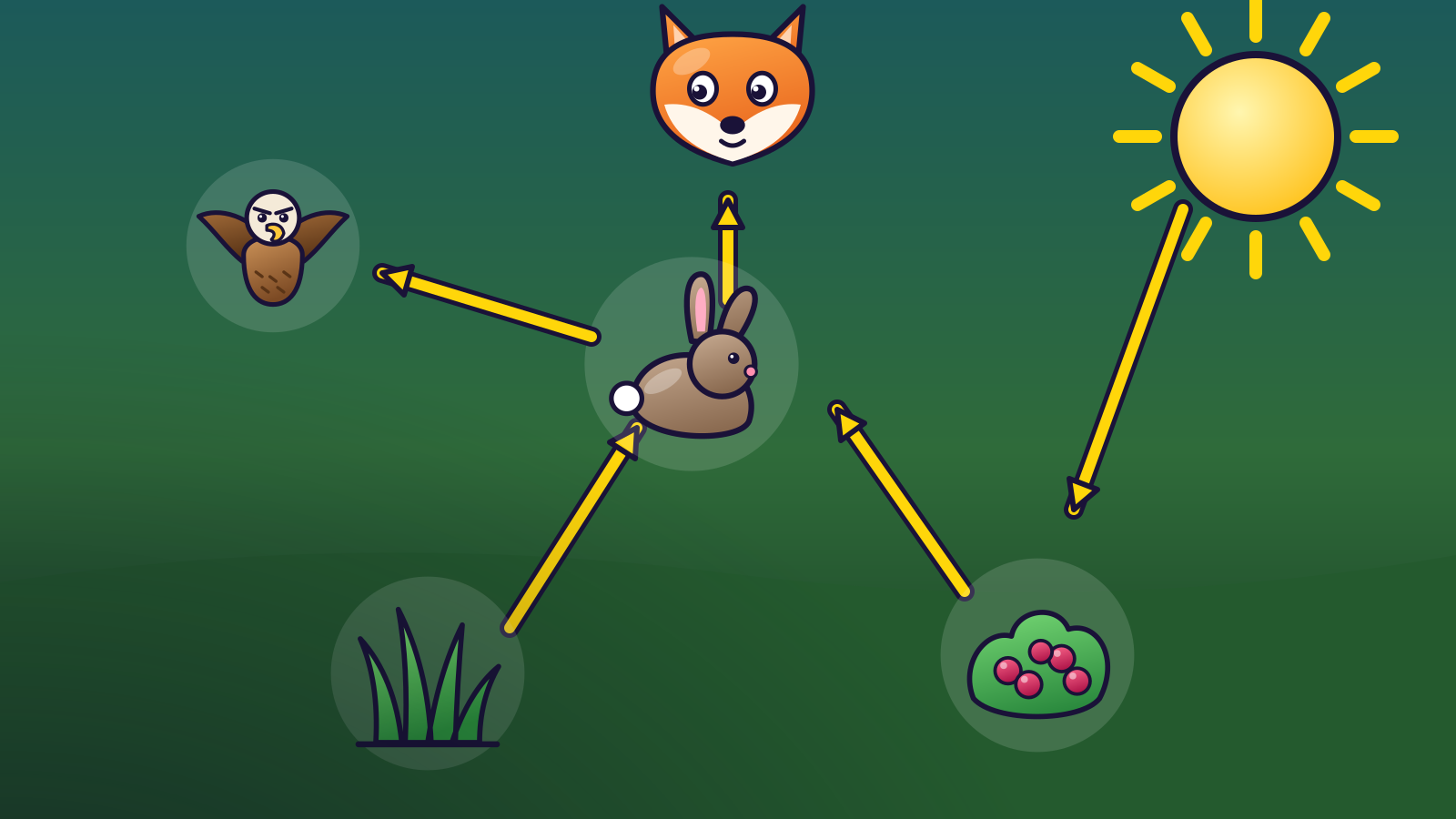
A food web joins many food chains together, with arrows pointing from the food to the eater, the way the energy goes. In Food Web Builder, a free game for grades 4 to 6, kids play one animal in a woodland, pond or ocean food web, eat what it really eats and dodge what eats it.
Key facts
- A food chain follows one path of energy, such as grass, a rabbit that eats the grass, and a fox that eats the rabbit. Source: National Geographic Education: Food chain
- Arrows in a food web point from the food to the eater, showing where the energy goes. Source: NOAA: Aquatic food webs
- Producers such as plants, algae and phytoplankton make their own food from sunlight by photosynthesis. Source: National Geographic Education: Food web
- Decomposers such as fungi and bacteria break down dead plants and animals. Source: National Geographic Education: Food web
- In the Next Generation Science Standards, fifth graders model how matter moves among plants, animals, decomposers and the environment (5-LS2-1). Source: Next Generation Science Standards: 5-LS2-1
In Food Web Builder, your kid becomes one animal from a food web, like a cottontail rabbit or a bluegill. They steer it to something it really eats before its energy runs out, while an animal that eats it gives chase. Each right meal draws an arrow from the food to the eater, and a cleared level shows the whole web with energy flowing through it.
What's in the game
- Woodland (grades 4–5): 11 organisms and 16 feeding links in an eastern North American forest, from grass and white oaks to red foxes and red-tailed hawks.
- Pond (grades 5–6): 12 organisms and 16 links, from algae and cattails to great blue herons and mink.
- Ocean (grade 6): 11 organisms and 15 links on the North Pacific coast, from phytoplankton and giant kelp to killer whales.
Every organism and every feeding link has a cited source and was checked by a separate fact-checker. Eating the wrong thing explains why it isn't food: it eats you, it's higher up the web, or your animal doesn't eat that kind of food at all.
Food chains, food webs and energy
A food chain follows one path of energy: grass, a rabbit that eats the grass, and a fox that eats the rabbit. A food web joins many food chains together, because most animals eat more than one thing and are eaten by more than one thing.
Arrows in a food web point from the food to the eater, the way the energy goes. Producers such as plants, algae and phytoplankton make their own food from sunlight by photosynthesis. Consumers get their energy by eating other living things.
Herbivores eat plants or algae, carnivores eat animals, and omnivores eat both. Decomposers such as fungi and bacteria break down dead plants and animals. The game leaves decomposers out, but every real food web has them.
Try it at home
Pick an animal you saw today, like a bird, a squirrel or a spider. Together, name two things it eats and one thing that eats it, and draw the arrows from food to eater. Then play a level of Food Web Builder: six right meals build the web.
Questions parents ask
What grade learns about food webs?
In the Next Generation Science Standards, fifth graders model how matter moves among plants, animals, decomposers and the environment (5-LS2-1), and middle schoolers model how energy flows and matter cycles in an ecosystem (MS-LS2-3). Food Web Builder's three levels are aimed at grades 4 to 6.
Which way do the arrows in a food web point?
From the food to the eater. The arrow shows where the energy goes: from the grass to the rabbit, and from the rabbit to the fox.
Is the game free, and does it work on a phone?
Yes. Food Web Builder plays in a web browser with no account, no download and no ads, with a keyboard, a touch screen or the on-screen buttons. Teachers can put it on a classroom projector with no student accounts.
Keep exploring
Sources
Every fact on this page was checked against these sources by a separate fact-checker on October 30, 2026. How we check facts.