In short
Civics games for grades 4 to 8 practice how the U.S. government is set up and what the Constitution says about rights. Civics Pop sorts powers into the three branches, then the Senate and the House, then four amendments of the Bill of Rights. Every item comes from the text of the Constitution or from official summaries.
Key facts
- Article I of the Constitution gives the legislative power to Congress, Article II the executive power to the President, and Article III the judicial power to the Supreme Court and lower federal courts. Source: National Archives: The Constitution of the United States, a transcription
- Every state has two senators, who serve six-year terms; members of the House serve two-year terms. Source: National Archives: The Constitution of the United States, a transcription
- A law sets the number of voting members of the House at 435. Source: U.S. House of Representatives: The House Explained
- The first ten amendments, ratified on December 15, 1791, are known as the Bill of Rights. Source: National Archives: The Bill of Rights, a transcription
- The Constitution has 27 amendments. Source: National Archives: The Constitution, Amendments 11–27
Much of the civics in these grades starts from one document. The Constitution splits the federal government into three branches, describes the two houses of Congress, and explains how it can be amended. The first ten amendments, ratified on December 15, 1791, are known as the Bill of Rights.
Civics Pop is built on those texts and official summaries: every bubble names a power, a rule or a right, and your kid shoots it into the group it belongs to. Two history games add the founding story around it.
The games
Civics Pop · Grades 4–8
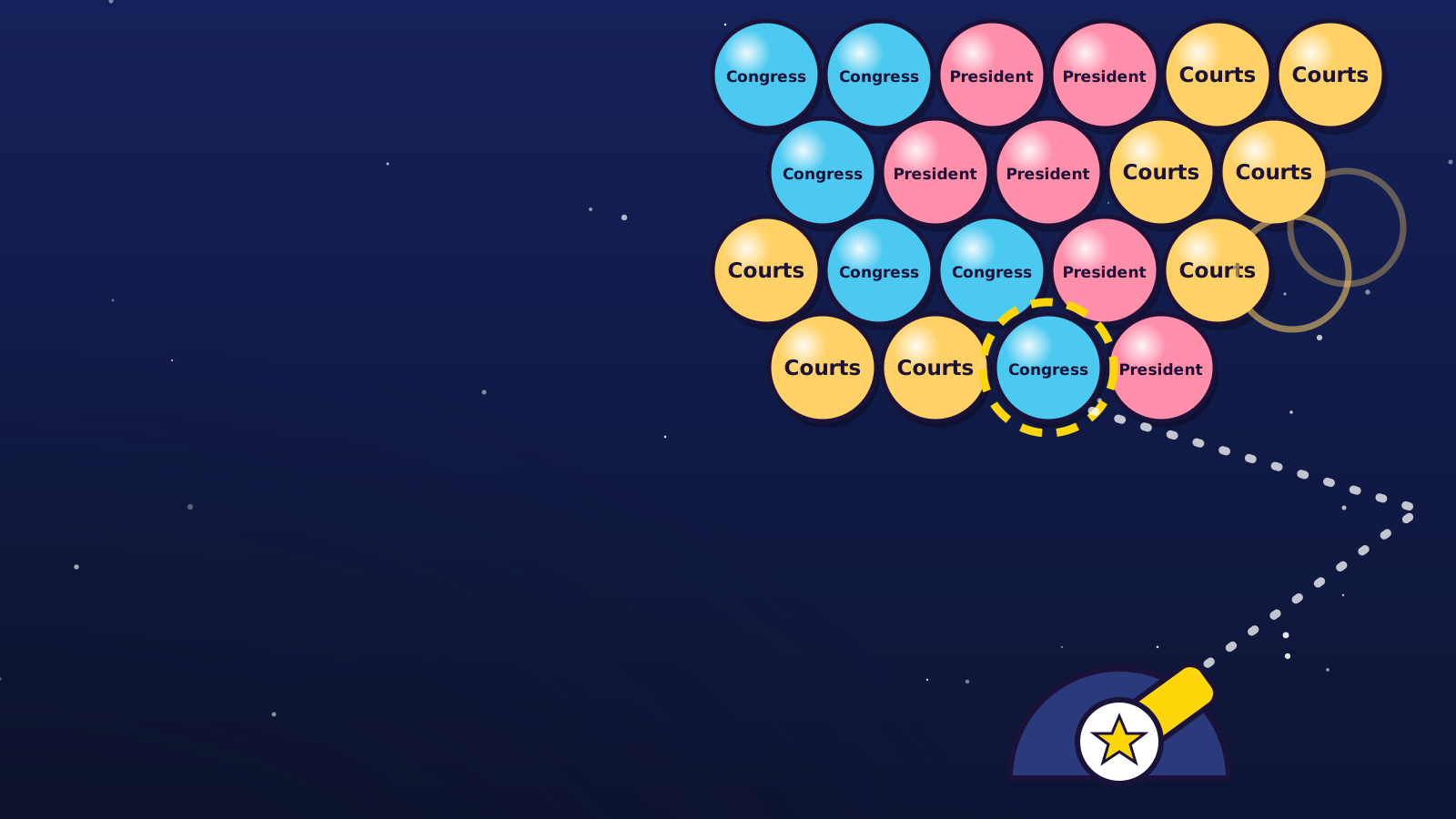
Aim the launcher and shoot each power, rule or right into the group it belongs to. Level 1 (grades 4–5) sorts by branch: Congress, the President or the courts. Level 2 (grades 6–7) asks whether something is true of the Senate, the House or both. Level 3 (grades 6–8) matches rights to the 1st, 4th, 5th and 6th Amendments. There is no clock, and a wrong group shows the right one and why.
Play level 1 of Civics PopTime Snake · Grades 4–8
The Early America level (grades 4–5) includes questions on the founding: the year the Declaration of Independence was adopted, the city where the Constitution was signed, the name for the first ten amendments and the first president.
Play level 1 of Time SnakeTimeline Rush · Grades 5–8
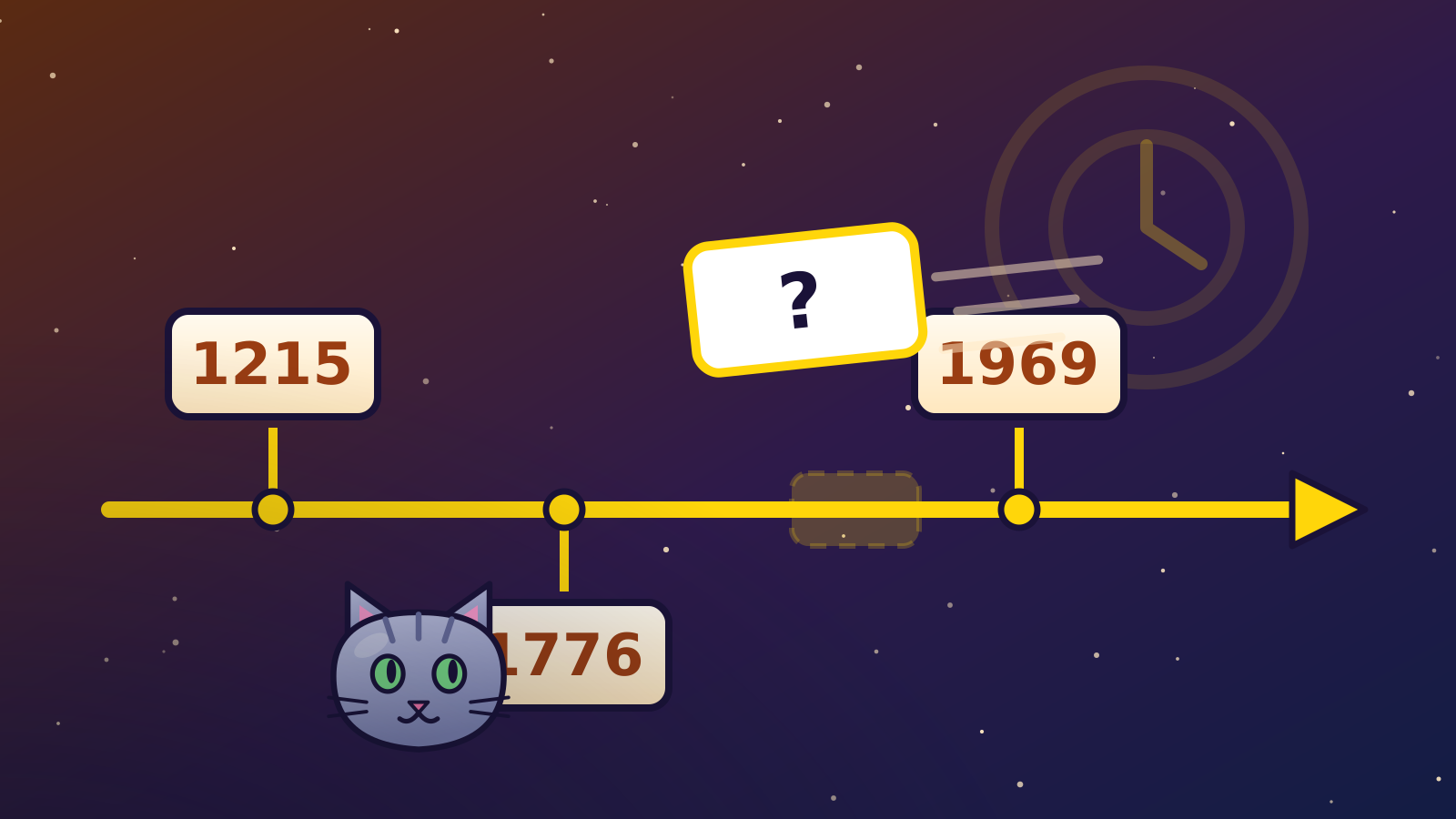
The U.S. history level (grades 5–6) asks kids to place events like the Declaration of Independence (1776), the signing of the Constitution (1787) and the 19th Amendment (1920) in order on a timeline.
Play level 1 of Timeline Rush

Free printables
- Three branches of government worksheet (1 practice page and a 1-page answer key, goes with Civics Pop)
The three branches
The Constitution gives each branch its own article. Article I gives the legislative power to Congress, Article II gives the executive power to the President, and Article III gives the judicial power to one Supreme Court and the lower courts Congress sets up.
- Congress makes the laws. The Constitution lists its powers, including setting and collecting taxes, coining money and declaring war.
- The President carries out the laws, is commander in chief of the Army and Navy, and serves a four-year term. The President can sign a bill into law or veto it, makes treaties with the agreement of two-thirds of the senators present, and nominates Supreme Court justices, who need the Senate's consent.
- The courts decide what laws mean, apply them to real cases, and decide whether a law goes against the Constitution. Federal judges hold their jobs during good behavior, which means no set term.
Each branch can respond to what the others do, which is called checks and balances. For example, the President can veto a bill, Congress can pass it anyway with a two-thirds vote in each house, and the courts can strike down a law that goes against the Constitution.
The Senate and the House
Congress has two parts, called houses. They share some jobs and split others, which is exactly what Civics Pop level 2 practices.
- The House of Representatives: members serve two-year terms and must be at least 25 years old and citizens for at least 7 years. Seats are shared out among the states by population, and a law sets the number of voting members at 435. The House chooses its Speaker, has the sole power to impeach, and bills for raising taxes must start there.
- The Senate: every state has two senators, who serve six-year terms and must be at least 30 years old and citizens for at least 9 years. The Vice President presides and votes only to break a tie. The Senate holds the trial after an impeachment, and two-thirds must agree to convict. It approves treaties and gives its consent to Supreme Court justices.
- Both: a bill must pass both houses before it goes to the President, each house sets its own rules and keeps a journal, and each can expel a member with a two-thirds vote. Since the 17th Amendment (1913), voters elect senators directly, as they always have elected representatives.
What the Bill of Rights says
Civics Pop level 3 covers four of the ten amendments in the Bill of Rights:
- 1st Amendment: Congress can make no law setting up an official religion or stopping people from practicing their religion, and it protects freedom of speech, freedom of the press, the right to gather peacefully, and the right to petition the government to fix a wrong.
- 4th Amendment: people are protected against unreasonable searches and seizures, and a warrant needs probable cause and must describe the place to be searched and the persons or things to be seized.
- 5th Amendment: a grand jury must charge a person before a trial for a very serious crime, no one can be tried twice for the same offense, no one can be forced to be a witness against themselves in a criminal case, no one can lose life, liberty or property without due process of law, and the government must pay fairly for private property it takes for public use.
- 6th Amendment: a person accused of a crime has the right to a speedy and public trial by an impartial jury, to be told what they are accused of, to face the witnesses against them, to call witnesses in their favor, and to have a lawyer.
A tip for telling the 5th and 6th apart: the 6th Amendment begins “In all criminal prosecutions” and is about how a trial must be run, while the 5th covers being charged by a grand jury, not being tried twice, not testifying against yourself, due process and property.
Mix-ups to watch for, and how to practice
- The President does not make laws. Congress passes bills, and the President signs or vetoes them.
- Senate and House numbers are easy to swap. Senate: two per state, six years, age 30. House: by population, two years, age 25.
- Impeach does not mean remove. The House impeaches, which means bringing charges, and the Senate holds the trial that can remove an official.
- Our suggestion for home: read the 1st Amendment aloud together. It is one sentence long, and your kid can count the five freedoms in it.
- In class: Civics Pop plays on a projector with no student accounts and no clock, so the class can discuss each bubble before anyone shoots. Ask students to find the article or amendment that proves the answer.
Questions parents and teachers ask
Are these civics games free?
Yes. They play in a web browser with no account, no download and no ads, on laptops, tablets, phones and classroom projectors.
Which grades are they for?
Civics Pop runs from grades 4–5 (the three branches) to grades 6–8 (the Bill of Rights). Time Snake's Early America level is for grades 4–5, and Timeline Rush's U.S. history level for grades 5–6.
Do the games take political sides?
No. Every item comes from the text of the Constitution and the Bill of Rights, from house.gov, or from USA.gov, and is checked against that source by a separate fact-check. There are no current events, parties or living people in the games.
Why does Civics Pop leave out the 2nd and 3rd Amendments?
Level 3 covers the 1st, 4th, 5th and 6th Amendments, so every right in it fits one group with no room for argument. The other amendments are not part of the game.
How is the Constitution changed?
Under Article V, one way is for two-thirds of both houses of Congress to propose an amendment and three-fourths of the states to ratify it. There have been 27 amendments.
Keep exploring
Sources
Every fact on this page was checked against these sources by a separate fact-checker on November 3, 2026. How we check facts.
- National Archives: The Constitution of the United States, a transcription
- National Archives: The Bill of Rights, a transcription
- National Archives: The Constitution, Amendments 11–27
- U.S. House of Representatives: The House Explained
- USA.gov: Branches of the U.S. government
- Civics Pop content file with every item and its source
- Time Snake content file (Early America level)
- Timeline Rush content file (U.S. history level)