In short
Learning games for 3rd and 4th grade should practice what these years are about: multiplication facts, fractions, area, the jobs words do, magnets and circuits, maps and the three branches of government. Twenty Genius Arcade games have a level for grade 3 or grade 4 (eight of them start in grade 3), and each Play button on this page opens that level. All are free in a browser, with no account and no ads.
Key facts
- In the Common Core, third graders are expected to know from memory all products of two one-digit numbers by the end of the year (3.OA.C.7). Source: Common Core: Grade 3 Operations and Algebraic Thinking (3.OA.C.7, products from memory)
- Grade 3 is when a fraction is first understood as a number on the number line (3.NF.A.2). Source: Common Core: Grade 3 Number and Operations, Fractions (3.NF.A.2, fractions on a number line)
- Fourth graders apply the area and perimeter formulas for rectangles (4.MD.A.3). Source: Common Core: Grade 4 Measurement and Data (4.MD.A.3, area and perimeter of rectangles)
- Fourth graders use frequently confused words like there and their correctly (L.4.1.G). Source: Common Core: Language, Grade 4 (L.4.1g confused words; L.4.5c antonyms and synonyms)
- The Next Generation Science Standards for grade 4 include evidence that energy can be carried by electric currents (4-PS3-2). Source: NGSS 4-PS3-2: energy transferred by sound, light, heat and electric currents
Third and fourth grade cover a lot of ground in math. In the Common Core math standards, grade 3 focuses on multiplication and division within 100, fractions (especially unit fractions like 1/4), area, and two-dimensional shapes. Grade 4 moves on to multiplying and dividing bigger numbers, equivalent fractions, adding and subtracting fractions with like denominators, and sorting shapes by their sides, angles and symmetry.
In reading and writing, these are the years kids learn to name the jobs words do in a sentence, and to pick the right word when two sound alike. In science, the Next Generation Science Standards (NGSS) for these grades include magnets, energy carried by electric currents, and how water, ice and wind wear down and carry away rock.
This page lists every Genius Arcade game with a level that fits grades 3 and 4, grouped by subject, and each Play button opens that level. Each level is short, 5 to 12 right answers, so one fits before school or at the start of a lesson.
The games
Answer Blaster · Grades 3–7
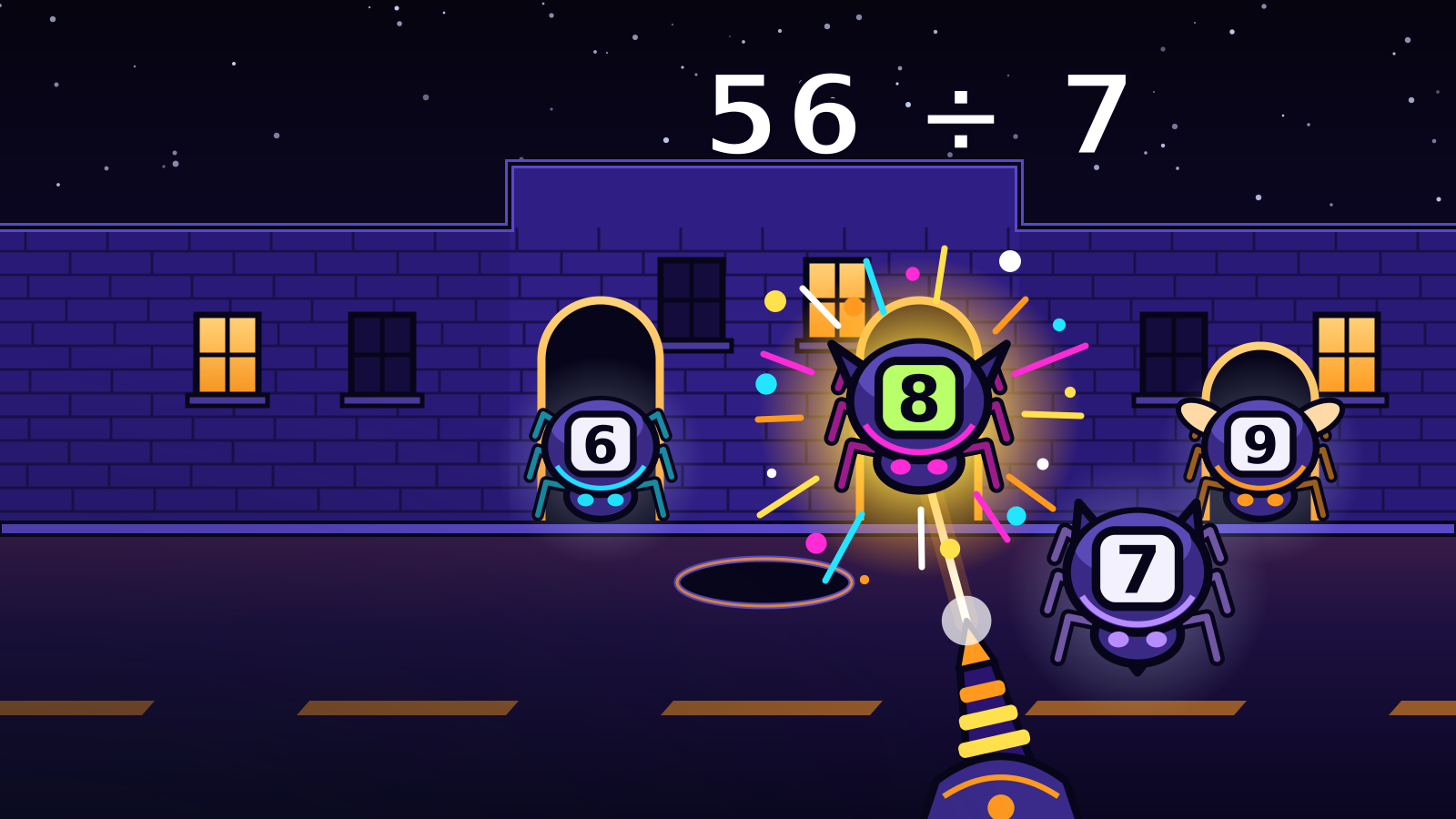
Level 1 mixes dividing and multiplying by 2, 5 and 10, with a missing-number question now and then. Four robot bugs close in, each carrying a number, and one shot at the bug with the right answer clears the pack. Levels 2 and 3 move on to 3, 4 and 6, then 7, 8 and 9, and level 4 has two-digit quotients such as 84 ÷ 6 = 14.
Play level 1 of Answer BlasterTimes Table Dash · Grades 3–5
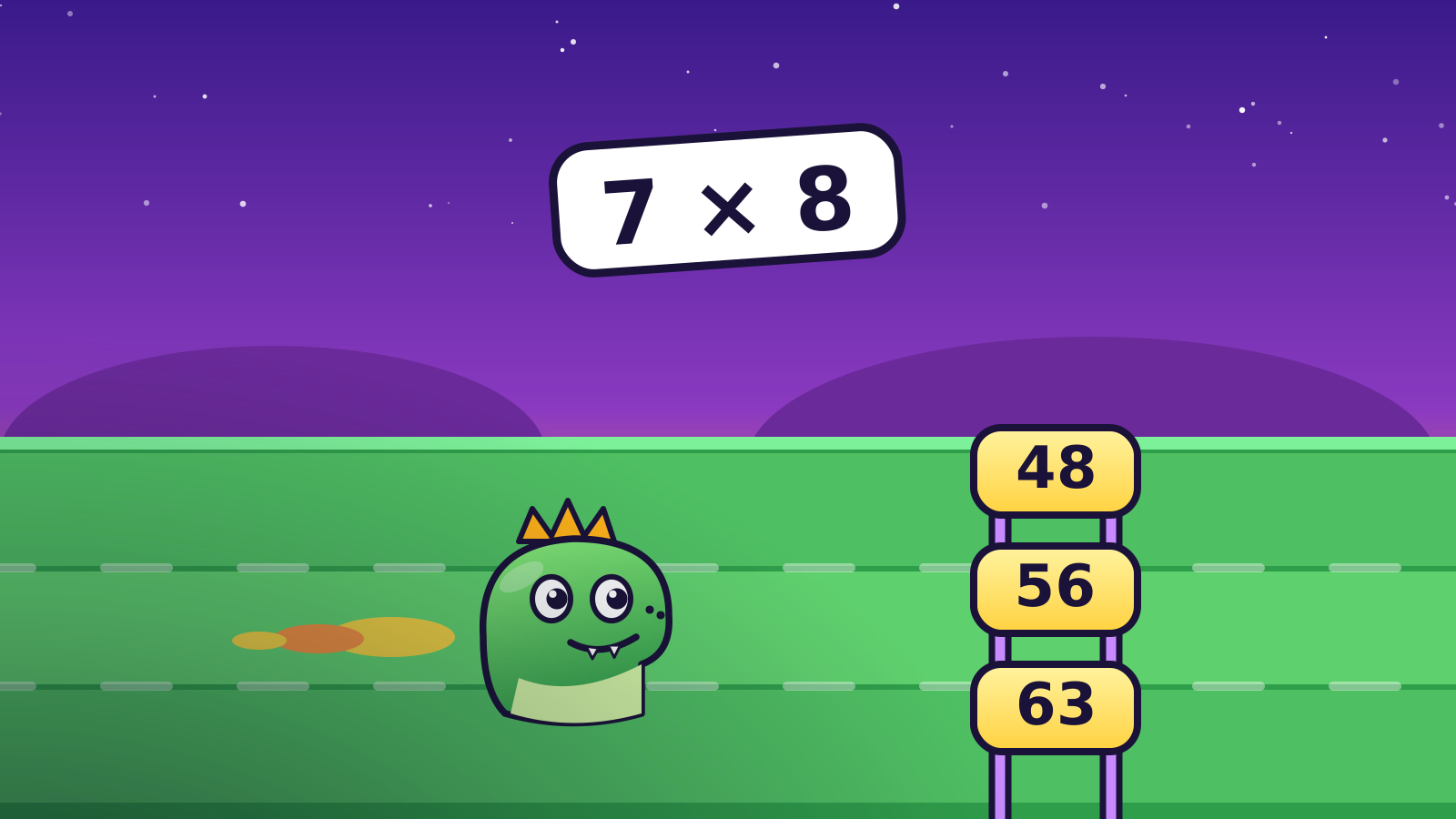
Level 1 runs the 2, 5 and 10 times tables from 1 to 12, and each question can come either way round (3 × 7 or 7 × 3). A miss shows the answer and a tip for that fact.
Play level 1 of Times Table DashMath-Man's Castle · Grades 3–8
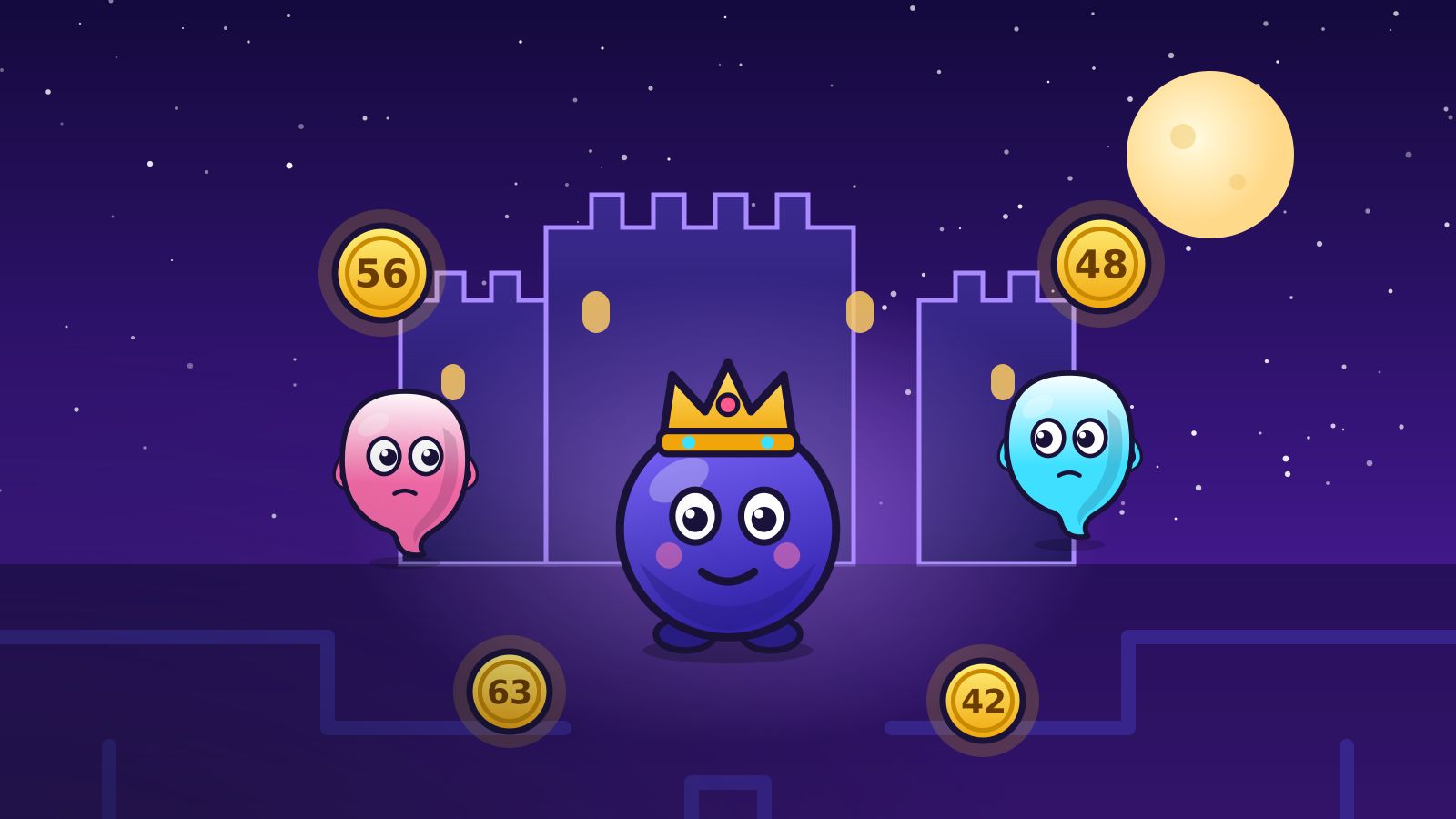
Level 1 (grade 3) is adding and subtracting in one step, like 47 + 8, 82 − 50 and 100 − 35. The four answers are coins in the corners of a dot maze, and the right coin spooks the ghosts so Math-Man can catch them. Level 2 (grade 4) uses the basic facts with tens and hundreds, like 80 + 70, 6 × 70 and 420 ÷ 6.
Play level 1 of Math-Man's CastleNumber Line Bounce · Grades 3–7
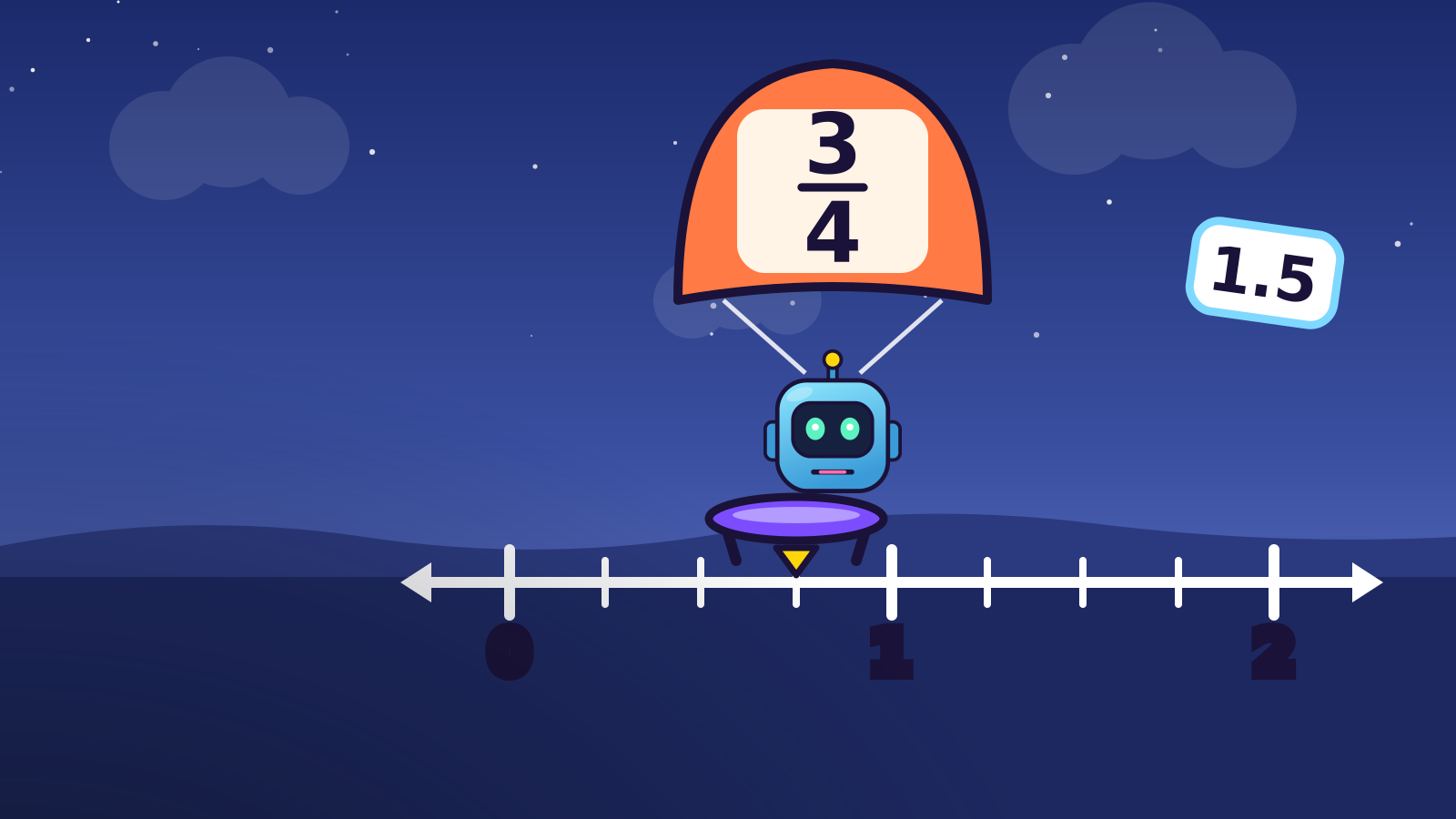
Level 1 places fractions between 0 and 1 on a number line, the grade 3 idea that a fraction is a number with its own spot on the line.
Play level 1 of Number Line BounceShape Breaker · Grades 4–8
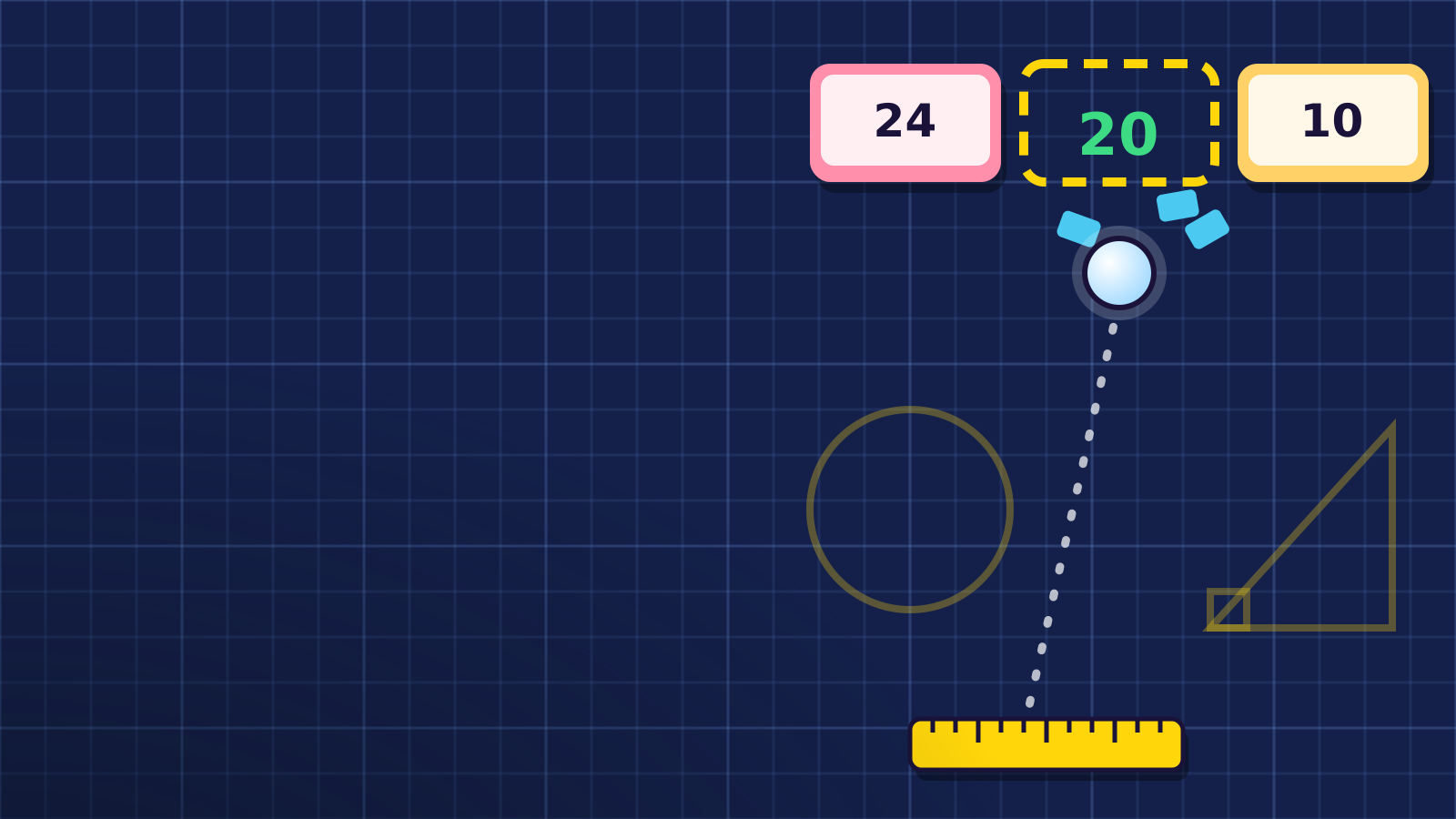
Level 1 asks for the perimeter and area of rectangles and squares, and a wrong brick shows the working, such as 6 + 4 + 6 + 4 = 20.
Play level 1 of Shape BreakerSlice of Speech · Grades 3–6
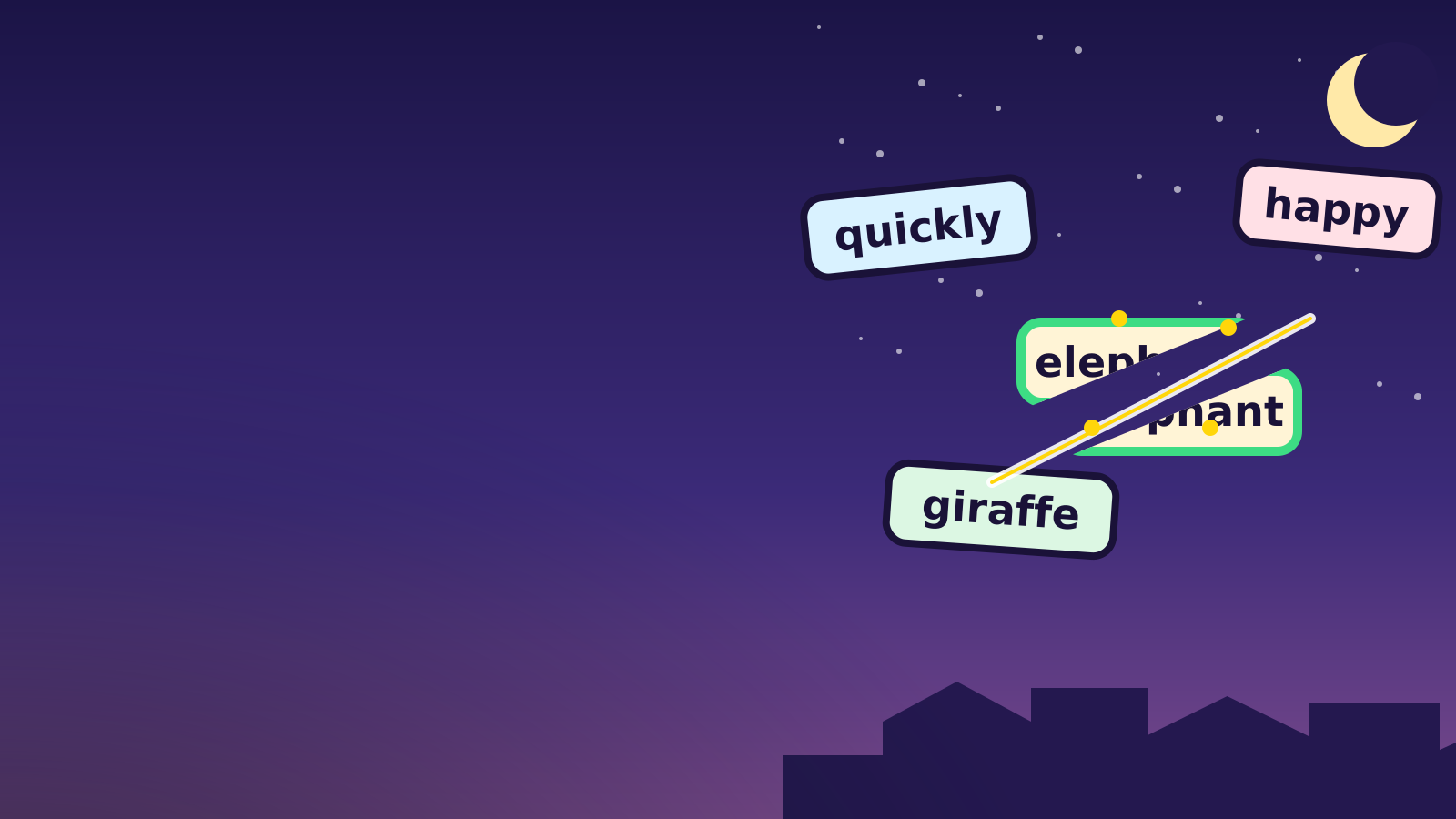
Level 1 has kids slice every noun, verb or adjective the round names. Level 2 moves on to pronouns and adverbs.
Play level 1 of Slice of SpeechWord River · Grades 4–6
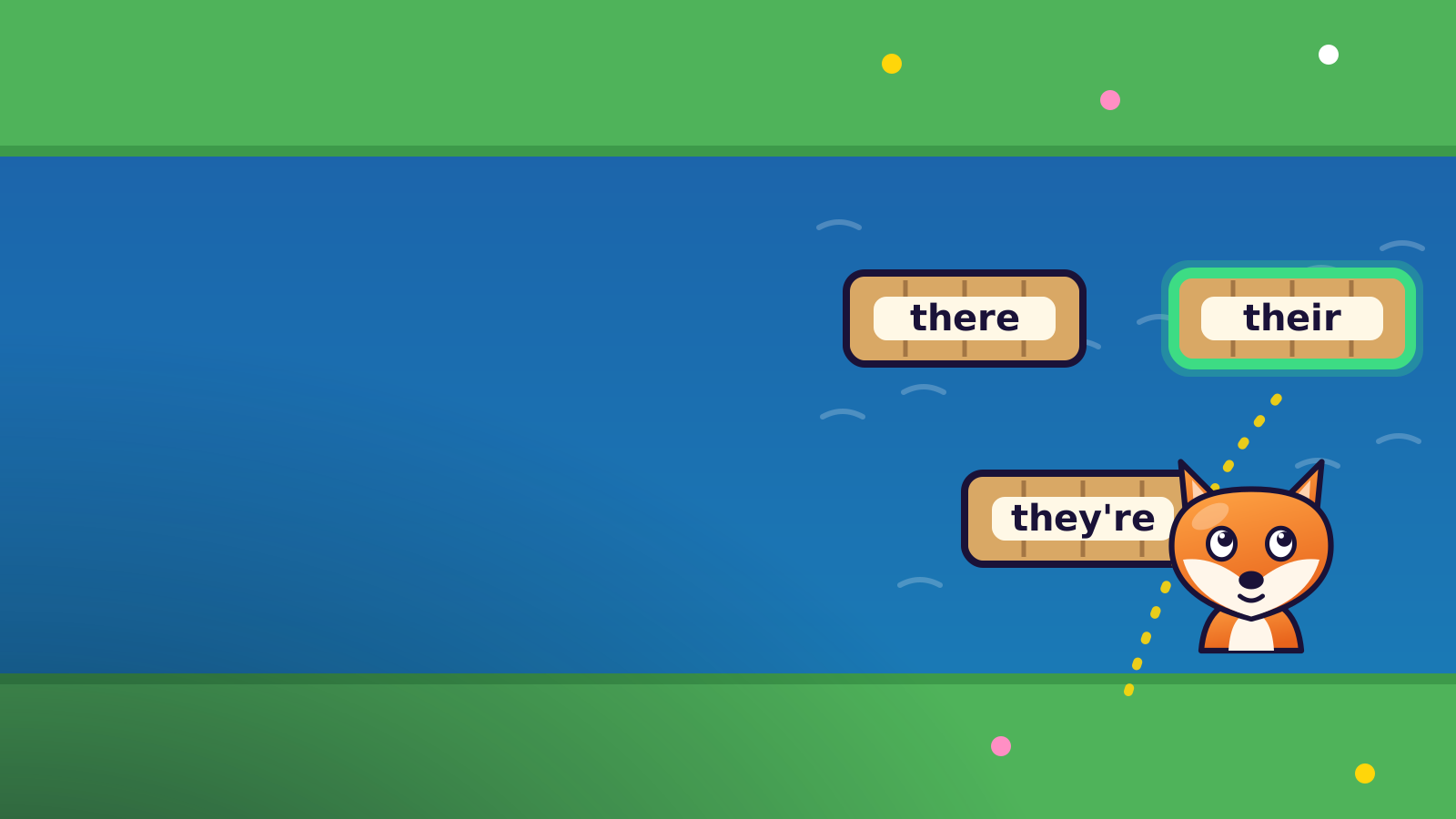
Level 1 is sound-alike words: hop onto there, their or they're, or our, are or hour, whichever fits the sentence.
Play level 1 of Word RiverType Rocket · Grades 3–8
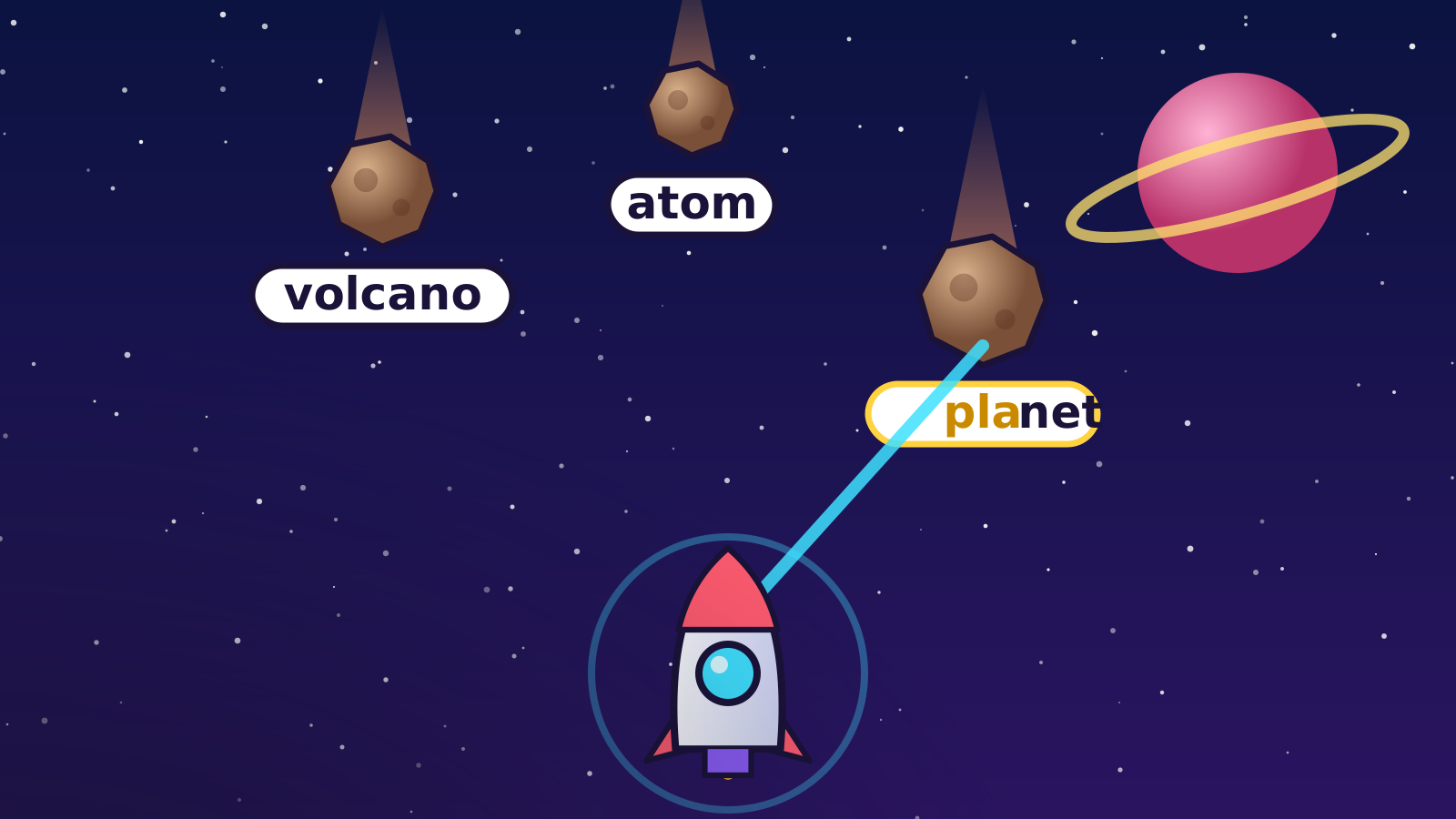
Level 1 has short school words such as sum, map and cell. Typing one zaps the meteor and shows what the word means.
Play level 1 of Type RocketCircuit Sprint · Grades 3–8
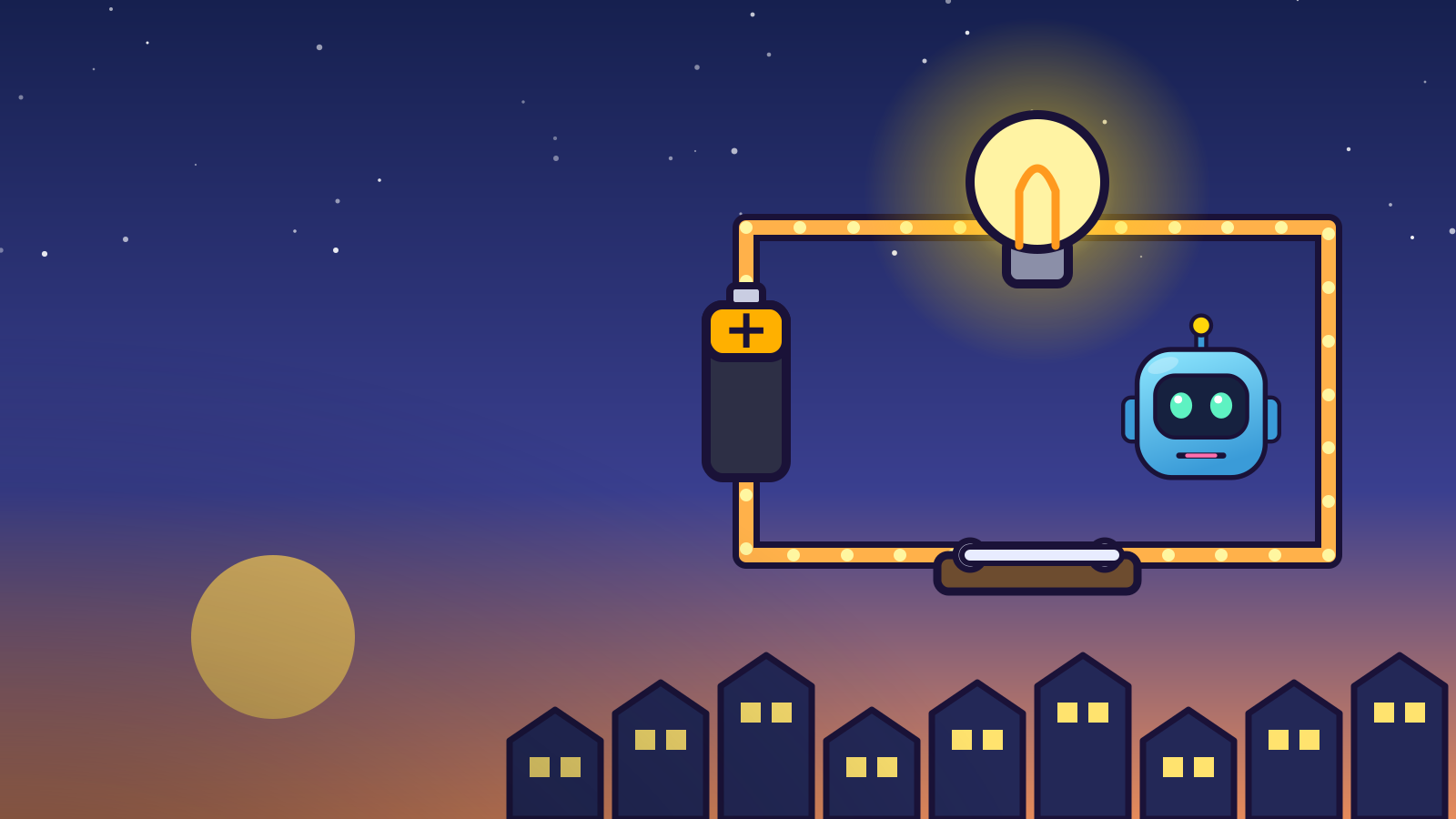
Level 1 finishes a single loop: choose the conductor over the insulators, add the battery, close the switch, and the bulb, buzzer or motor comes on.
Play level 1 of Circuit SprintBeaker Bop · Grades 4–6
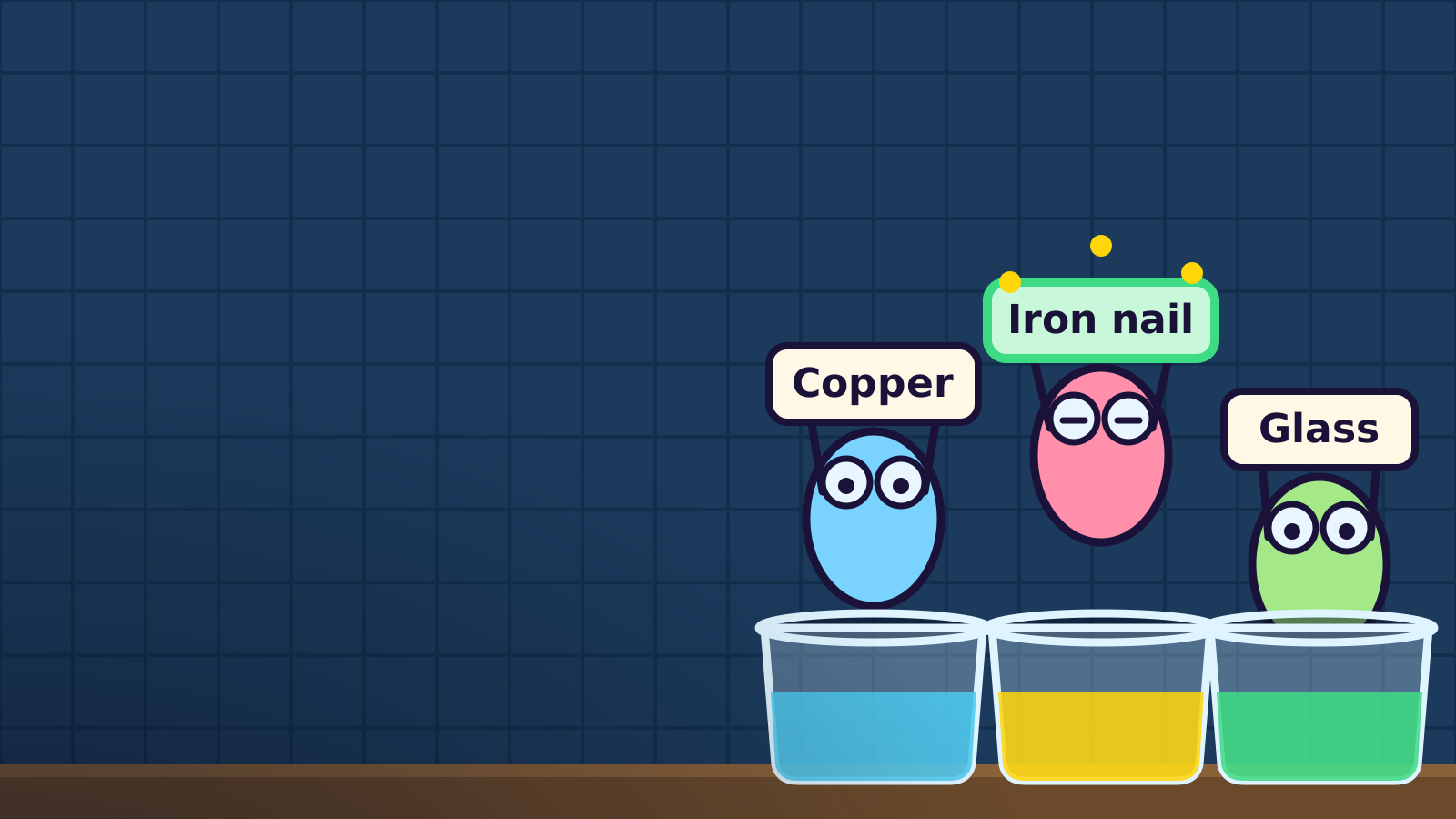
Level 1 asks which materials a magnet pulls and which ones conduct electricity, and a wrong bop shows what the material is and why.
Play level 1 of Beaker BopRock Stack · Grades 4–8
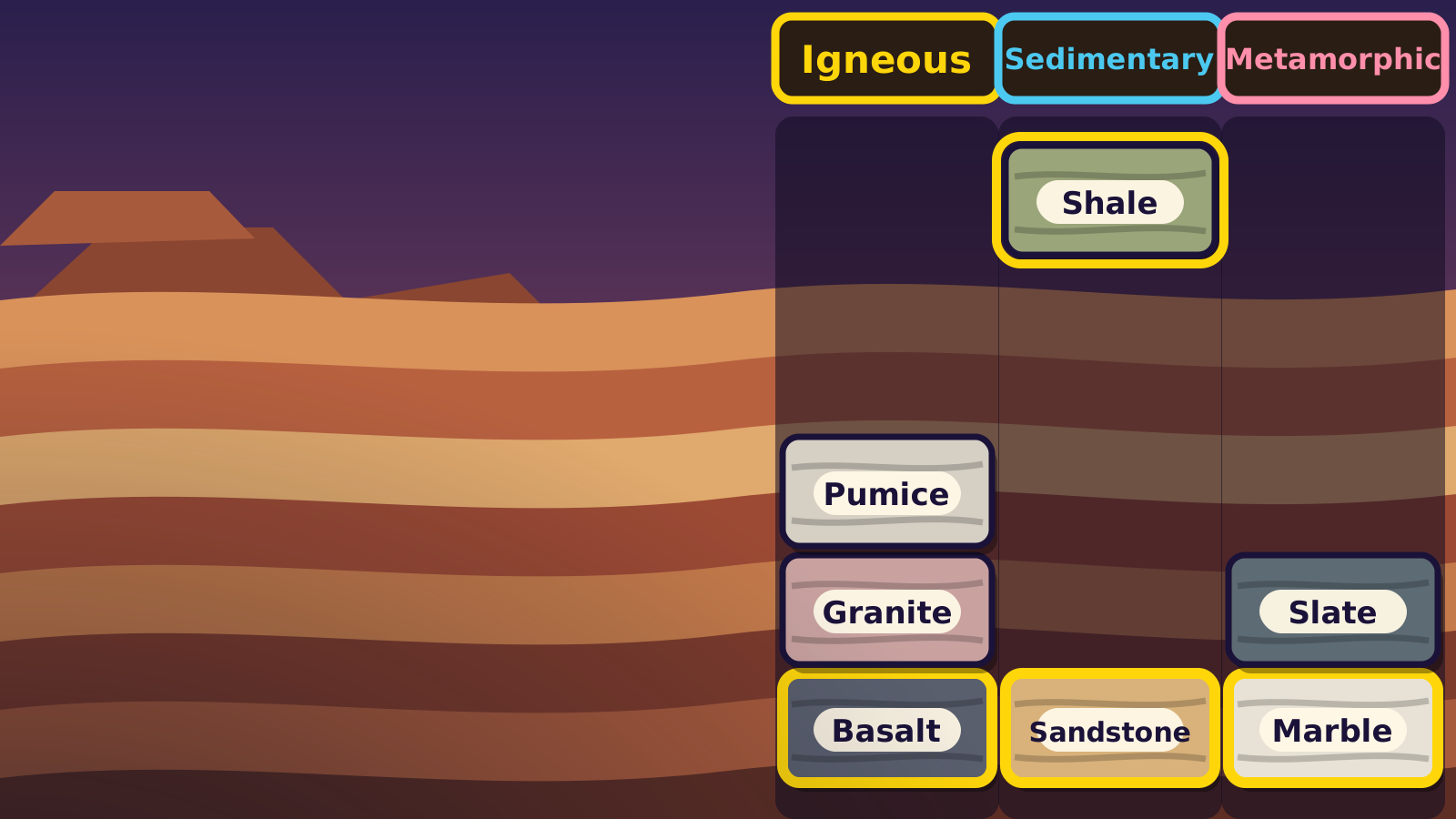
Level 1 sorts slabs into weathering, erosion and deposition: rock breaking down, being carried away, and being dropped somewhere new.
Play level 1 of Rock StackSort Storm · Grades 4–6
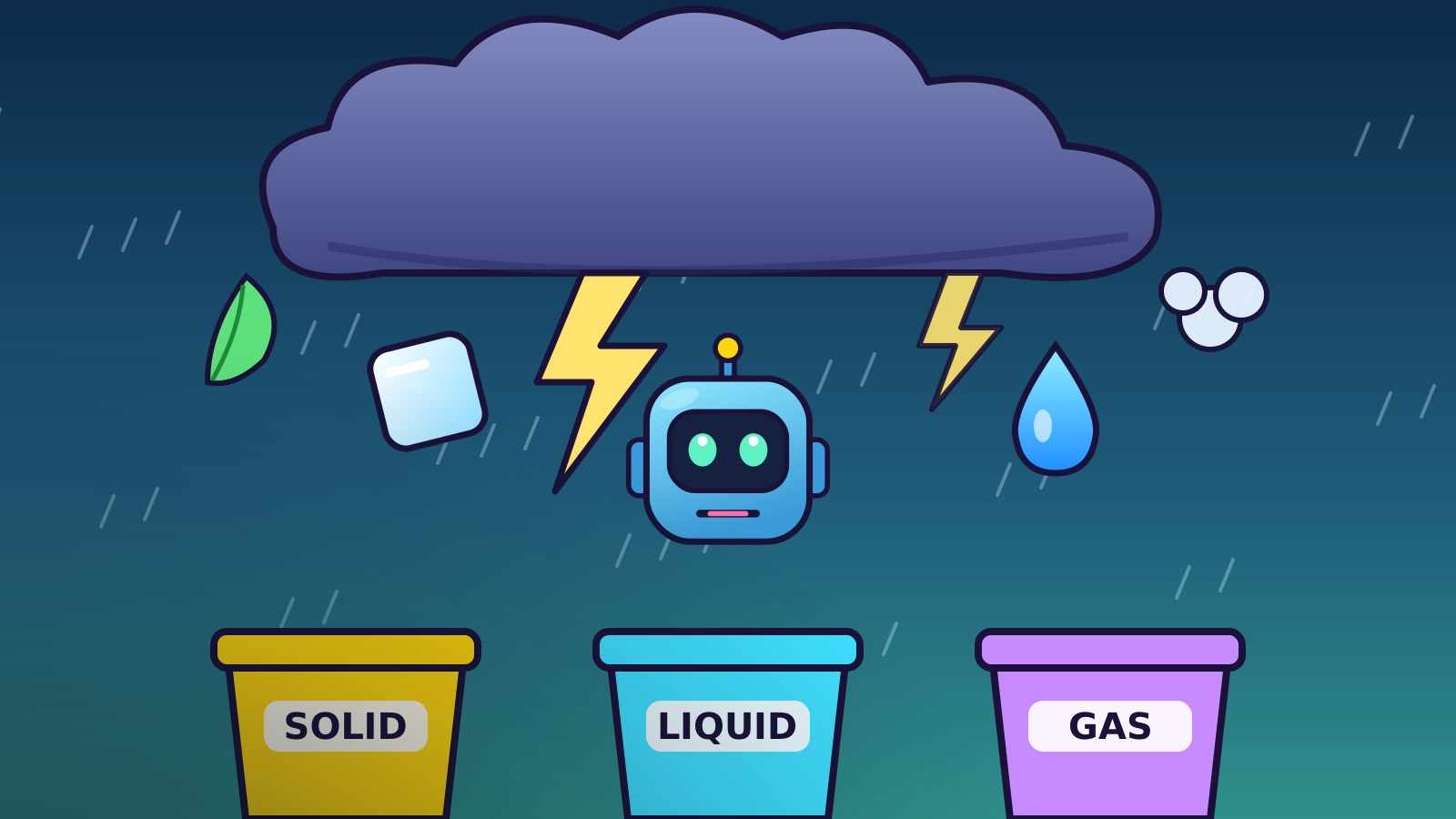
Level 1 steers everything the storm drops into the solid, liquid or gas bin.
Play level 1 of Sort StormFood Web Builder · Grades 4–6
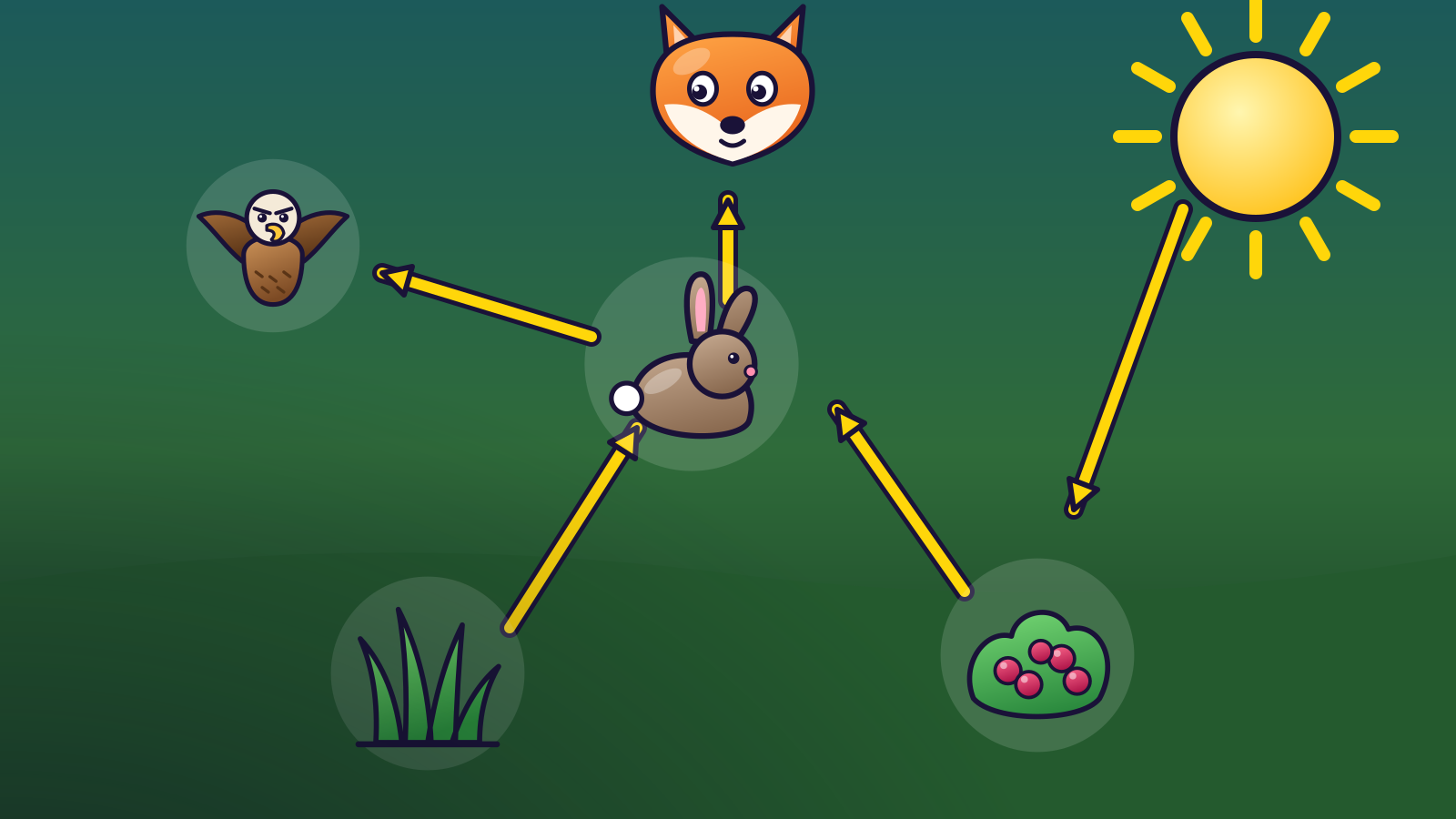
Level 1 is a woodland: you play one animal, find something it really eats before your energy runs out, and get away from the animal that eats you.
Play level 1 of Food Web BuilderPlanet Hop · Grades 4–8
Level 1 hops to the planet a clue describes, such as the planet closest to the Sun.
Play level 1 of Planet HopSky Atlas · Grades 4–9
Level 1 flies the plane to the continent or ocean named on screen. Level 5 does the same for the U.S. states and their capitals.
Play level 1 of Sky AtlasStamp Swap · Grades 4–7
Level 1 lines up 3 stamps with countries from the same continent, such as Kenya, Ghana and Nigeria in Africa.
Play level 1 of Stamp SwapCivics Pop · Grades 4–8
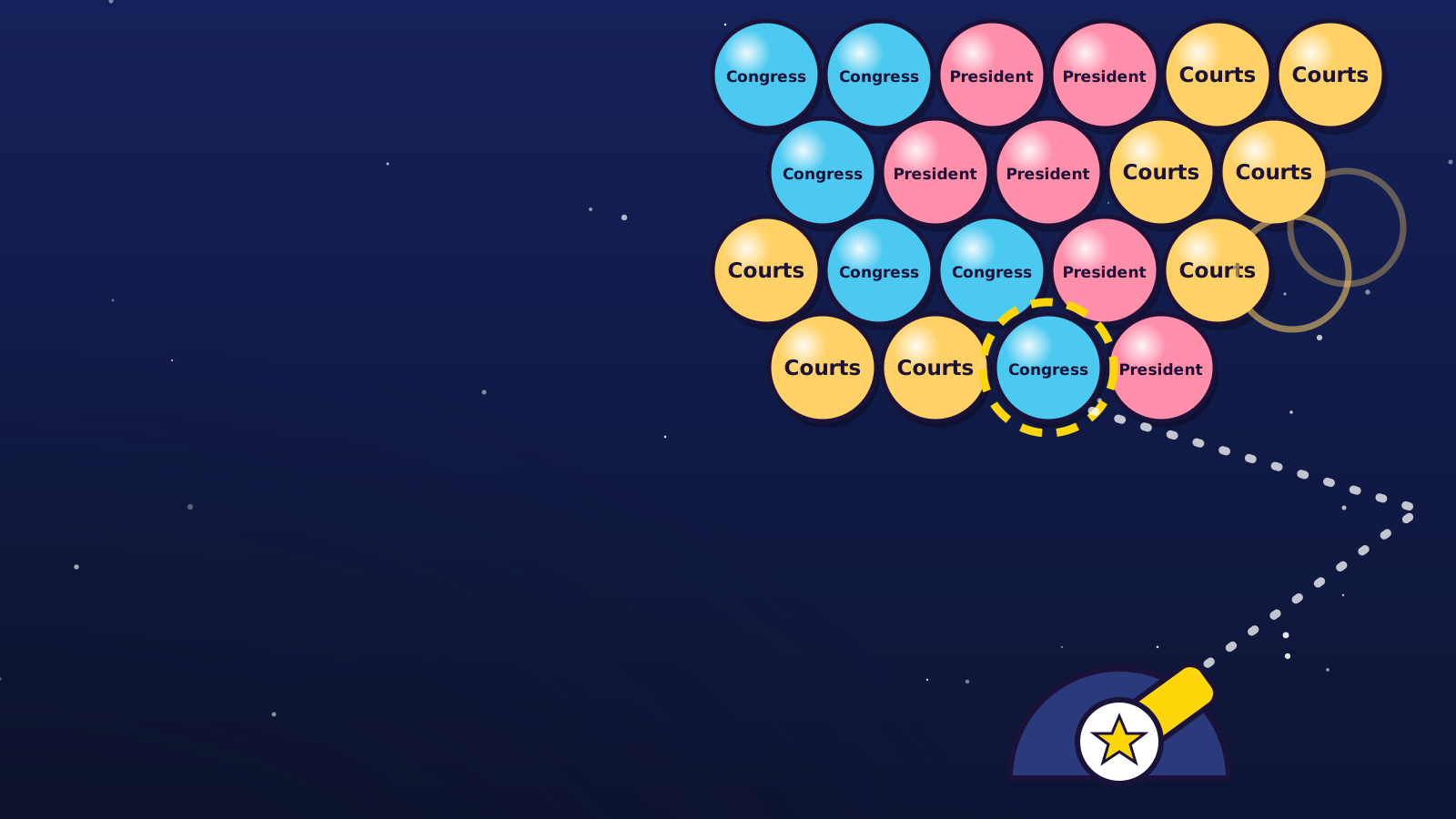
Level 1 sorts powers into the three branches of the U.S. government, such as which branch makes the nation's laws.
Play level 1 of Civics PopTime Snake · Grades 4–8
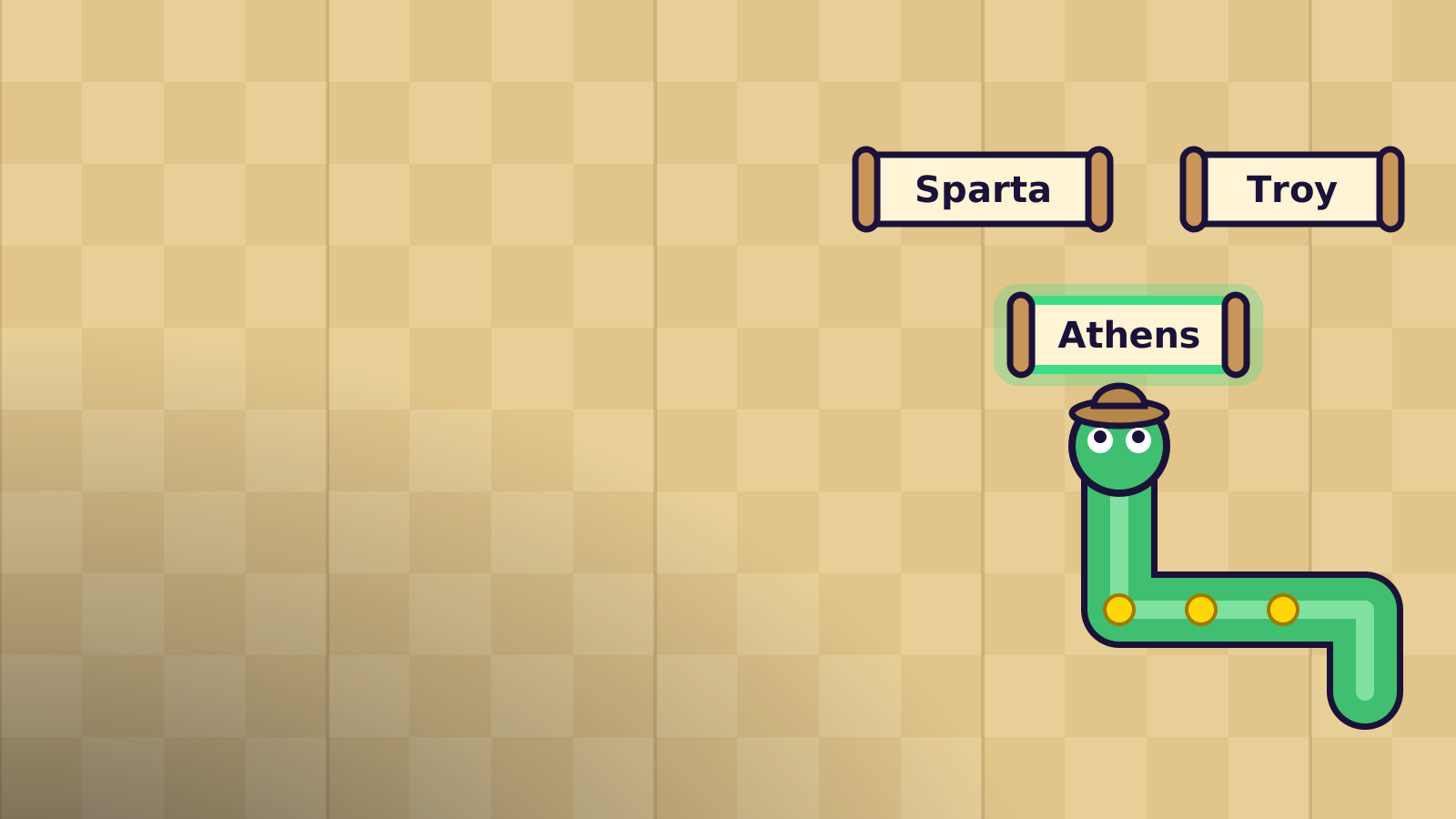
Level 1 asks about early America, from Jamestown in 1607 and the Mayflower in 1620 to the Underground Railroad.
Play level 1 of Time SnakeWord Catcher · Grades 3–7
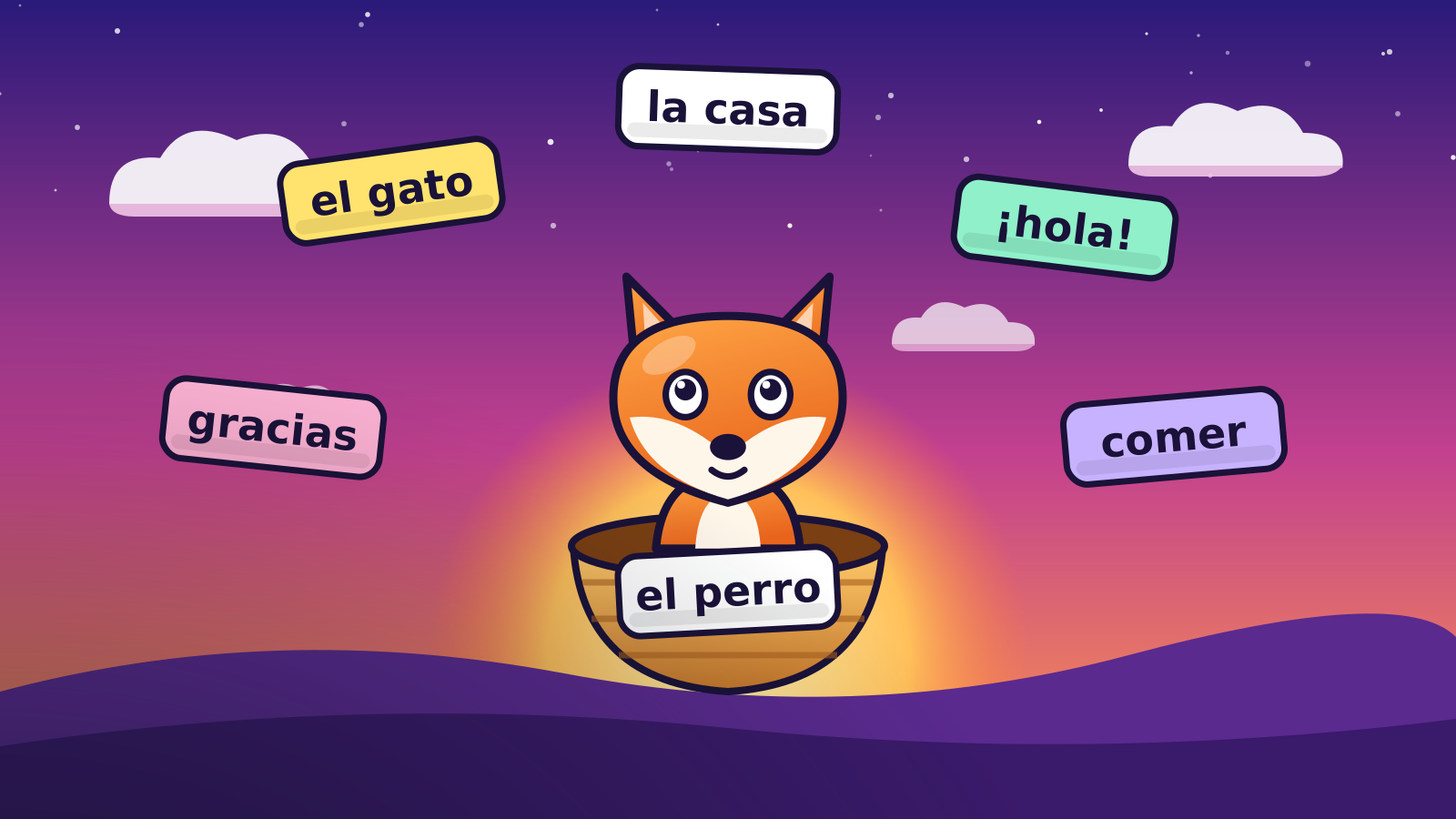
Level 1 catches everyday Spanish nouns with el or la, such as el perro (the dog) and la casa (the house).
Play level 1 of Word CatcherWord Catcher: French · Grades 4–8
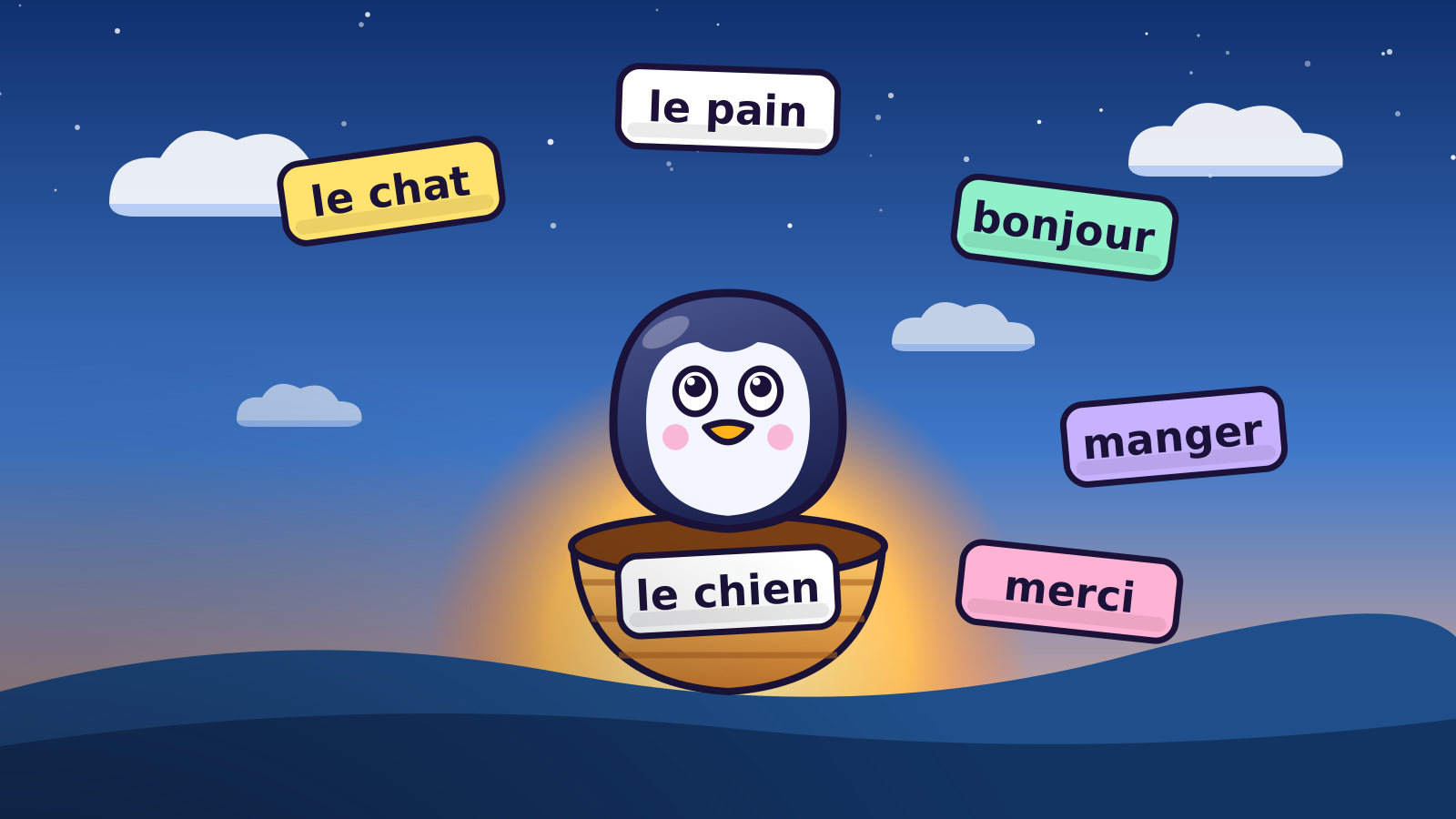
Level 1 catches everyday French nouns such as le chien (the dog), for kids who have started French.
Play level 1 of Word Catcher: French



Free printables
- Printable multiplication chart with blanks (1–12) (2 practice pages and a 1-page answer key, goes with Times Table Dash)
- Winter math worksheets for grades 3 to 7 (3 practice pages, a 10-day plan and a 2-page answer key, goes with Times Table Dash)
- Fractions on a number line worksheet (2 practice pages and a 1-page answer key, goes with Number Line Bounce)
- Parts of speech worksheet: cut-and-sort cards (2 practice pages and a 1-page answer key, goes with Slice of Speech)
- Printable 50 states and capitals checklist (1 practice page and a 1-page answer key, goes with Sky Atlas)
- Three branches of government worksheet (1 practice page and a 1-page answer key, goes with Civics Pop)
Math: facts first, then fractions and area
The Common Core grade 3 standards expect students to know from memory, by the end of the year, all products of two one-digit numbers. That is why two of the games below are about multiplication facts. They practice the same facts in different ways, so a child who tires of one can switch to the other.
- Times tables: Times Table Dash and Answer Blaster both start with 2, 5 and 10, and Answer Blaster asks the same facts as division too.
- Adding and subtracting: Math-Man's Castle level 1 adds a one-digit number or whole tens to a two-digit number, or takes them away, like 47 + 8 and 82 − 50. Level 2 uses the basic facts with tens and hundreds, like 6 × 70.
- Fractions: Number Line Bounce puts fractions on a number line, which is how the grade 3 standards first describe a fraction.
- Area and perimeter: Shape Breaker level 1 practices the grade 4 standard of using the area and perimeter formulas for rectangles.
Reading and writing: the jobs words do
In the Common Core language standards, third graders learn to explain what nouns, pronouns, verbs, adjectives and adverbs do in a sentence. Fourth graders are expected to use frequently confused words like there and their correctly, and to relate words to their opposites (antonyms) and to words with similar meanings (synonyms).
Slice of Speech covers the first of these, one part of speech per round. Word River level 1 covers sound-alike words, and its level 2 covers words that mean the same or the opposite. Type Rocket is typing practice built from math, science and geography words, so kids see each word's meaning as they go.
Science: magnets, circuits and a changing Earth
NGSS grade 3 includes how magnets push and pull on things they are not touching. Grade 4 includes evidence that energy moves from place to place by sound, light, heat and electric currents, and the effects of weathering and erosion by water, ice, wind and plants.
Circuit Sprint and Beaker Bop are the closest fit for magnets and electricity: one has kids finish working circuits, the other has them pick out the materials a magnet pulls and the ones that conduct. Rock Stack level 1 is weathering, erosion and deposition. Sort Storm, Food Web Builder and Planet Hop start with states of matter, food webs and the planets. NGSS places food webs, the movement of matter among plants, animals, decomposers and the environment, in grade 5, so Food Web Builder level 1 is a head start.
Maps, early America and how government works
Social studies topics differ a lot from state to state, so these games stick to things that are the same everywhere: where places are on a map, what happened when in early American history, and what each branch of the federal government does. The U.S. Constitution divides the federal government into three branches: Congress makes the laws, the president leads the executive branch, and the Supreme Court and other federal courts make up the judicial branch.
Sky Atlas and Stamp Swap are map games, Civics Pop is the three branches, and Time Snake is early American history. Every question comes with a short explanation, so a wrong answer still teaches the fact.
Practicing at home in a few minutes
Our suggestions, from watching kids play:
- Keep it short. One five-minute round on a school night does more than an hour once a week.
- Match the game to this week's homework. If the worksheet is the 6 times table, Answer Blaster level 2 has it.
- Ask your child to explain one answer they missed. Every game shows the right answer after a mistake, and almost all explain why, so there is something to talk about.
- Let them repeat a level they have already beaten. Getting faster at known facts is real practice, not wasted time.
Picking a starting level
Each Play button on this page opens the level that fits grades 3 and 4, and every game has a Choose a level menu to move up or down. Our suggestion: start one level below where you think your child is. If they get almost everything right, move up; if a level feels like a wall, step back one. A third grader who is still learning the 3s is better served by Answer Blaster level 1 than by level 3.
For teachers: whole class on the projector
Every game here plays in a web browser with no account and no student logins, so you can open one on the classroom projector in a few seconds. The games work with a keyboard (arrow keys or WASD), touch or on-screen buttons, and each has a pause button and separate music and sound-effect switches. Our suggestion: have the class call out answers while one student steers, then switch drivers every few questions.
Questions parents and teachers ask
Are these games free?
Yes. They play in a web browser with no account, no download and no ads, and nothing in the games can be bought.
My child is ahead of (or behind) grade level. Will these still work?
Yes. Most games have three levels that span several grades, so a fourth grader can start at a level written for grades 5 and 6, or step back to a grade 3 level. The 5th and 6th grade page lists the next set of levels.
Do they work on a tablet, phone or Chromebook?
Yes. They run in a web browser and work with touch, a keyboard or on-screen buttons.
Do the games have timers or lives that make kids anxious?
Many have no clock at all, including Rock Stack, Stamp Swap and Civics Pop, and in Answer Blaster a miss costs nothing for the first 35 seconds of a run (a Queen's question aside). Every game has a pause button.
Do these follow my state's standards?
The Common Core site says 41 states, the District of Columbia and four territories have adopted its standards, but states set their own standards, so check yours. The games line up with skills that appear in the Common Core and NGSS for these grades.
Keep exploring
- Learning games for 5th and 6th grade
- Learning games for 7th and 8th grade
- Math games for grades 3 to 9
- Word games for grades 3 to 8: English, Spanish and French
- Science games for grades 3 to 10
- Geography, history and civics games for grades 4 to 9
- Fraction games for grades 3 to 5
- Grammar games for grades 3 to 6
- Parts of speech games for grades 3 to 6
- Civics games for grades 4 to 8
- Multiplication games for times tables practice
- Fractions on a number line: a game that makes them land
- States of matter game: solid, liquid or gas?
- Food web game: who eats whom?
- Electric circuits: a game where the town's lights only come on if you get it right
- Solar system game: hop to the right planet
- Countries of the world quiz: find them on the map
- States and capitals game: fly to all 50 states
- Spanish vocabulary game: catch the right word
- French vocabulary game: catch the right word
Sources
Every fact on this page was checked against these sources by a separate fact-checker on November 3, 2026. How we check facts.
- Common Core State Standards: Grade 3 Mathematics introduction
- Common Core State Standards: Grade 4 Mathematics introduction
- Common Core: Grade 3 Operations and Algebraic Thinking (3.OA.C.7, products from memory)
- Common Core: Grade 3 Number and Operations, Fractions (3.NF.A.2, fractions on a number line)
- Common Core: Grade 4 Measurement and Data (4.MD.A.3, area and perimeter of rectangles)
- Common Core: Language, Grade 3 (L.3.1a, functions of nouns, pronouns, verbs, adjectives, adverbs)
- Common Core: Language, Grade 4 (L.4.1g confused words; L.4.5c antonyms and synonyms)
- Common Core: About the Standards (states that adopted them)
- NGSS 3-PS2-3: electric and magnetic interactions
- NGSS 4-PS3-2: energy transferred by sound, light, heat and electric currents
- NGSS 4-ESS2-1: weathering and erosion
- NGSS 5-LS2-1: matter among plants, animals, decomposers and the environment
- USAGov: Branches of the U.S. government
- Time Snake content file (Jamestown 1607, Mayflower 1620)